0 Results for ""
The Infrastructure Layer That Defines What Frontier AI Can Do: Why We’re Doubling Down on Patronus AI


The first era of LLM training is over.
From roughly 2022 to 2025, the defining resource was static internet text: scrape more, train more. That model worked quite well, up to a point. But while internet scraping and static text captures knowledge, they don't capture action.
An agent that needs to run a company's entire procurement process or conduct in-depth scientific research autonomously needs something the internet simply doesn't contain: experience operating in those environments, failing, and learning from it. This is exactly how humans learn, and it's how agents need to learn, too.
Think of it like Waymo. Waymo can't physically drive every route in the world, so they build predictive simulations of the physical environment that let the car learn to handle scenarios it has never encountered on an actual road. Patronus AI is doing the same thing for the digital world by building environments where agents can practice long-horizon tasks that don't exist in any dataset, at a scale and diversity that no human annotation effort could produce.
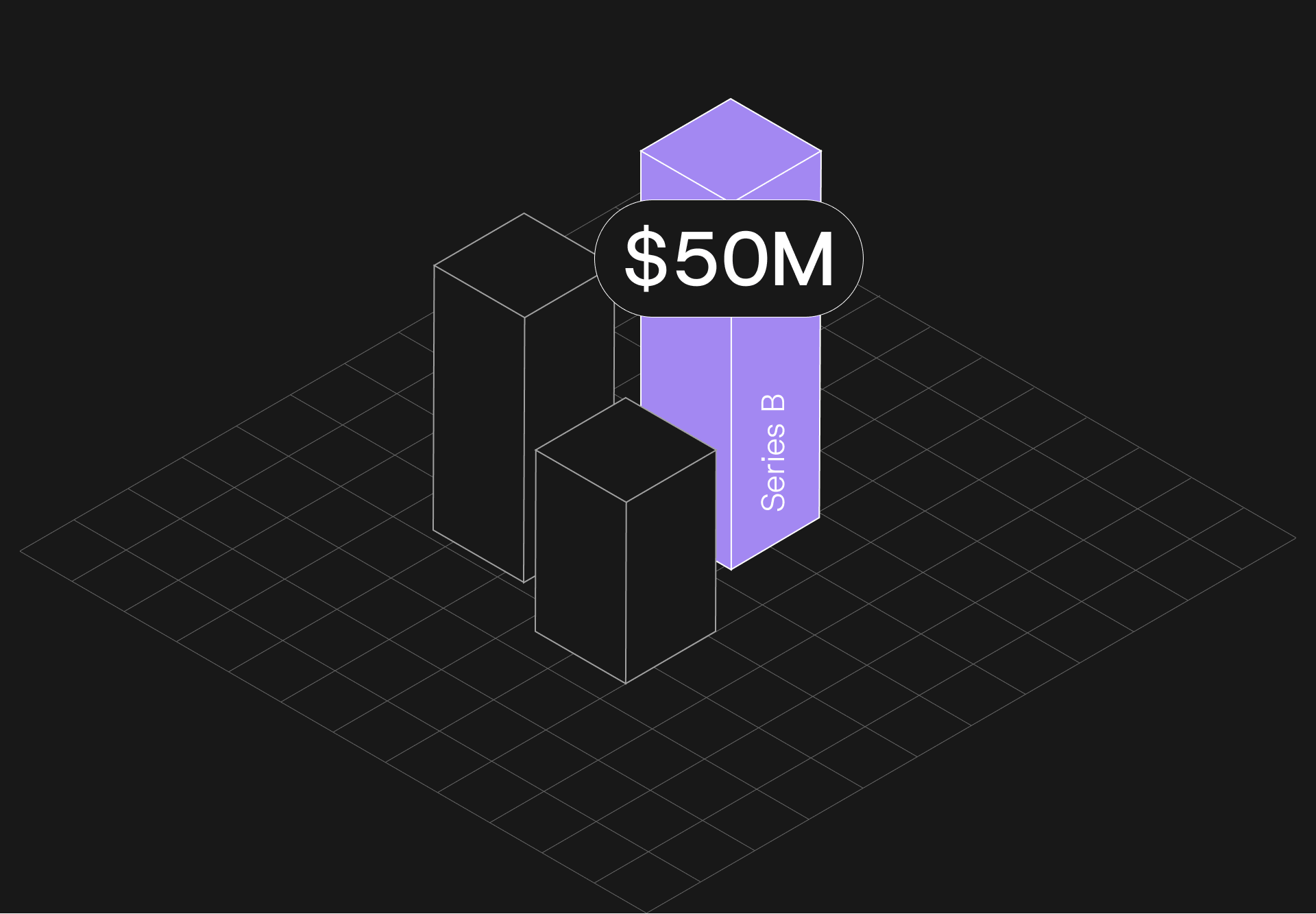
The companies that can build simulation infrastructure will define what frontier AI can and cannot do. That's why we're proud to announce we're continuing to back the Patronus AI team in their $50M Series B.
From evals to environments
Anand Kannappan and Rebecca Qian founded Patronus AI around a conviction that hasn't changed: AI systems need to be rigorously evaluated and deeply aligned with human intent. What's evolved since they started the company in 2023 is where that problem is best solved.
After initially tackling the evaluation problem and the industry's tendency to optimize against benchmarks rather than build AI that actually works in the real world, a more impactful path emerged. By creating simulations to help the models themselves get better, every downstream application benefits.
The way Patronus builds these simulation environments is by training models on the way agents (and humans) behave across digital workflows. What actions do they take, what succeeds, what fails? Over time, those models get good enough at understanding agent behavior that they can generate new simulation environments on their own. You end up with a flywheel: better simulations produce better models, which produce better simulations. They've already demonstrated that their 2.1B-parameter model outperforms models four times its size on tasks it's never even seen before.
The Longer Arc
As AI systems become more capable, the infrastructure for evaluating and overseeing them has to scale with them. Anand and Rebecca have been thinking about that problem longer than most. Anand spent years at Meta leading early work in responsible AI research and causal inference before turning his attention to what it would take to make those systems reliably trustworthy. Rebecca comes from FAIR, where she trained and released FairBERTa, the first large language model trained with a fairness objective — foundational work on the very problem Patronus is now tackling at the infrastructure layer.
That expertise is what allowed them to spot the bigger problem and go all-in on solving it at the source. We're proud to continue partnering with Anand, Rebecca, and the entire Patronus team.